


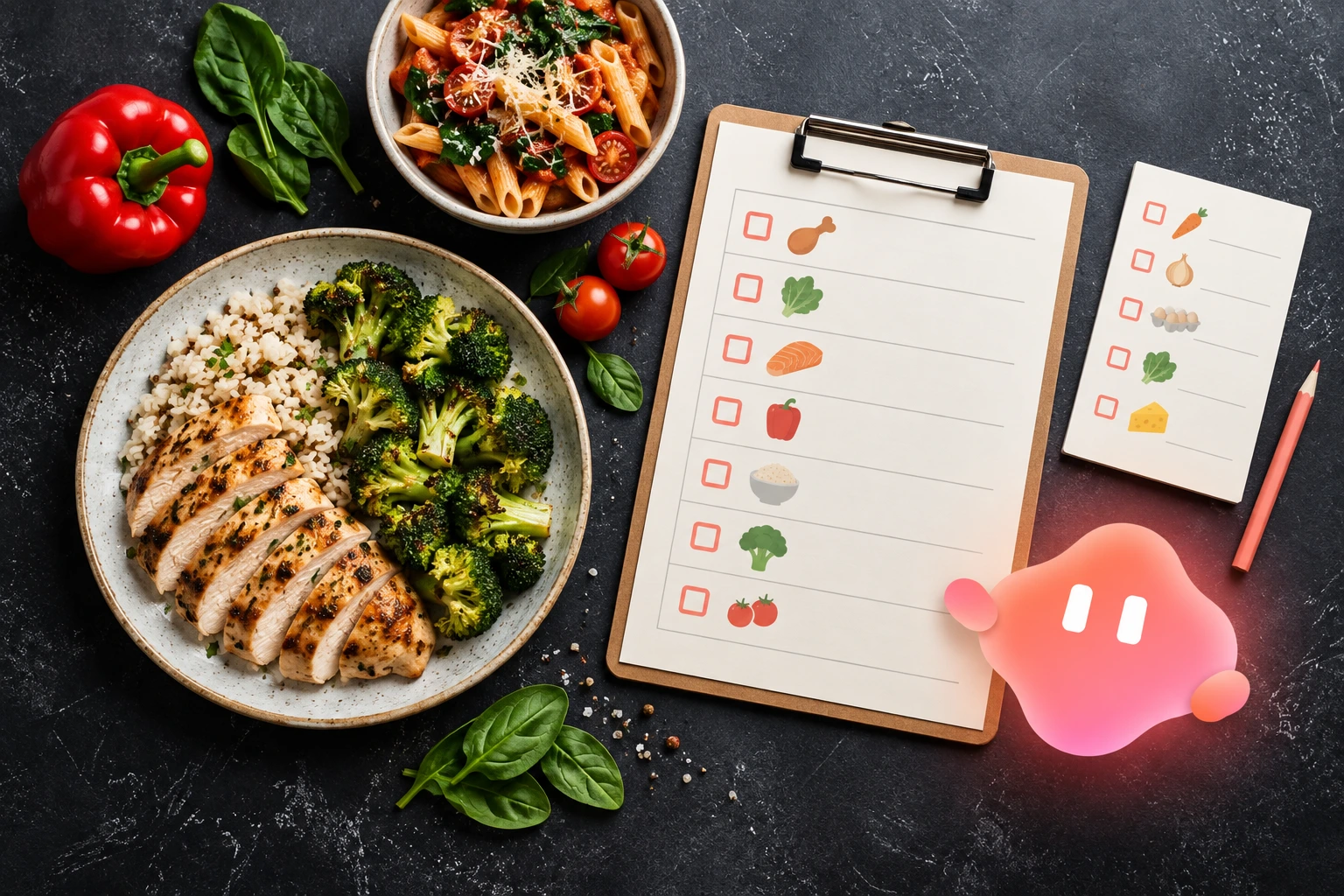
You saved a dozen recipes and bought a full cart of groceries. By Wednesday, dinner still requires another trip to the store. The missing piece is a connection between the meals you chose, the ingredients you bought, and the time you actually have.
Meal planning for beginners starts with a manageable week: familiar dinners, ingredients used in more than one dish, and one grocery list. Here is a simple way to put those pieces together.
How to start meal planning
Open your calendar before choosing recipes. Mark the evenings when you will eat at home, then give your busiest nights the easiest meals. A wrap made with yesterday's chicken belongs on a late-work night. An unfamiliar recipe belongs on an evening with room to learn.
Start by planning dinners. Keep breakfasts and lunches familiar while you build the habit, and remember to include their ingredients when shopping. Try just one new recipe in your first week.
Meal planning for the week: use what you have
Check the fridge, freezer, and pantry. Write down food that needs using soon, then match it to meals you enjoy. Half a bag of spinach can go into wraps and pasta. Bell peppers can work in quesadillas and an omelet.
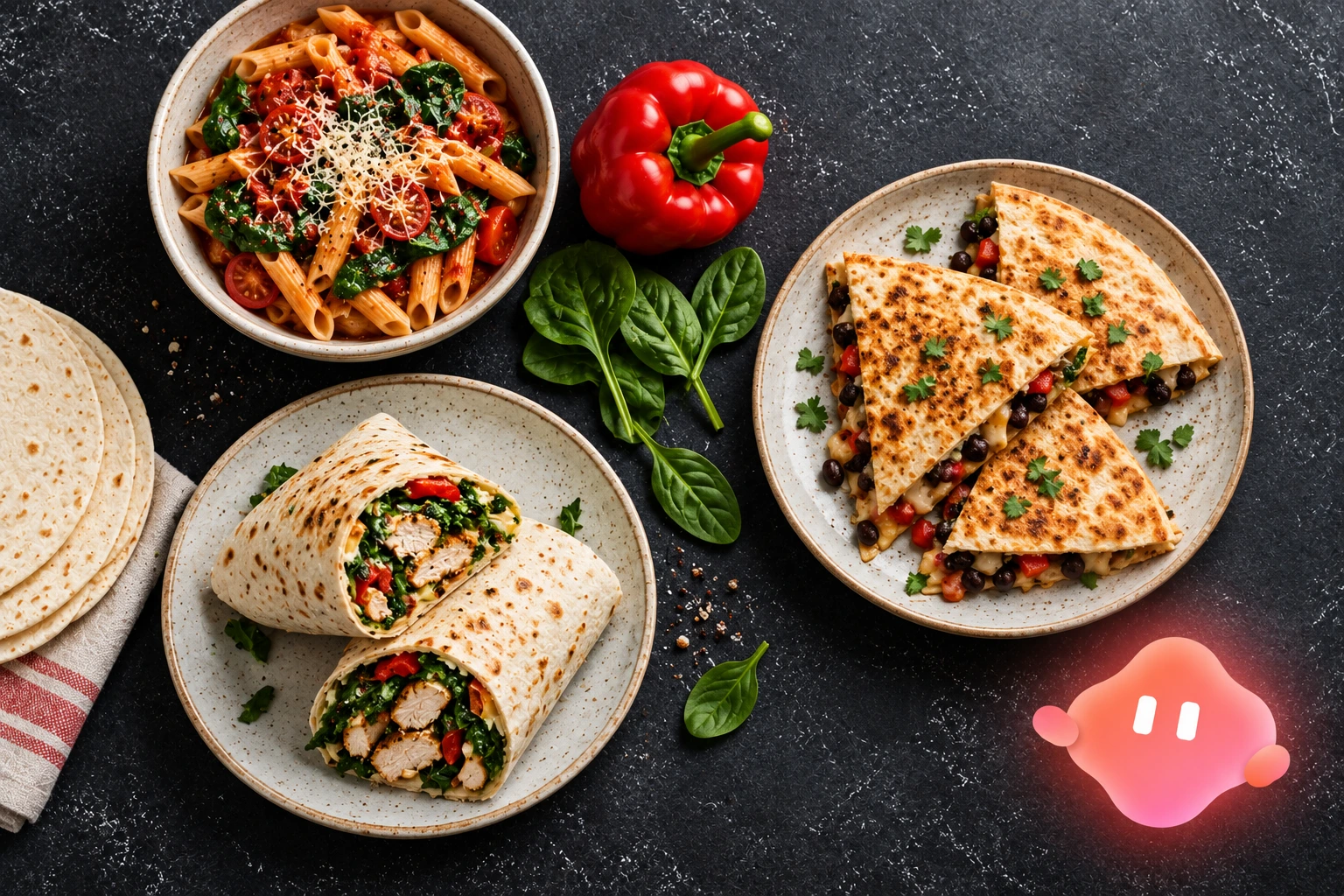
Use this seven-day dinner template to build your weekly meal plan. Choose recipe quantities for the number of people eating.
| Day | Dinner | Planning shortcut |
|---|---|---|
| Monday | Chicken, rice, and broccoli | Cook extra chicken for Tuesday |
| Tuesday | Chicken wraps with spinach | Use Monday's refrigerated chicken |
| Wednesday | Black bean and pepper quesadillas | Keep extra tortillas in the freezer |
| Thursday | Tomato and spinach pasta | Make an extra portion for Friday |
| Friday | Leftover pasta | Give yourself an evening off cooking |
| Saturday | Black bean rice bowls with salsa | Cook fresh rice and open a can of beans |
| Sunday | Omelet with remaining vegetables | Use suitable vegetables before shopping again |
The meals share ingredients without making every dinner identical. Add your usual breakfasts, lunches, and snacks to complete the week's plan.
Turn your meal plan into a grocery list
Read each chosen recipe, adjust its servings, and combine repeated ingredients. If two recipes each need half a bell pepper, your list needs one pepper. Cross off what you already own before buying anything.
For the dinner template, your starting list is:
- Produce: broccoli, spinach, bell peppers.
- Protein: chicken, eggs, canned black beans.
- Grains: rice, tortillas, pasta.
- Dairy: cheese for quesadillas, if using.
- Pantry: tomato sauce, salsa, cooking oil, and your chosen seasonings.
Add quantities from your recipes. This is a shopping framework, so include any extra ingredients your versions require. For meal planning on a budget, compare unit prices and choose overlapping ingredients you will actually finish.
Combining recipes and quantities is also where a digital tool can help. Remeal is being built to connect personalized meal ideas, weekly plans, grocery lists, and step-by-step cooking. Explore meal planning with Remeal if you want those tasks to fit together.
Prep the parts that slow you down
Choose one small prep task, such as chopping peppers for your next dinner or measuring its seasonings. Cook extra portions when a nearby meal will use them. You can plan the whole week while cooking most dinners fresh.
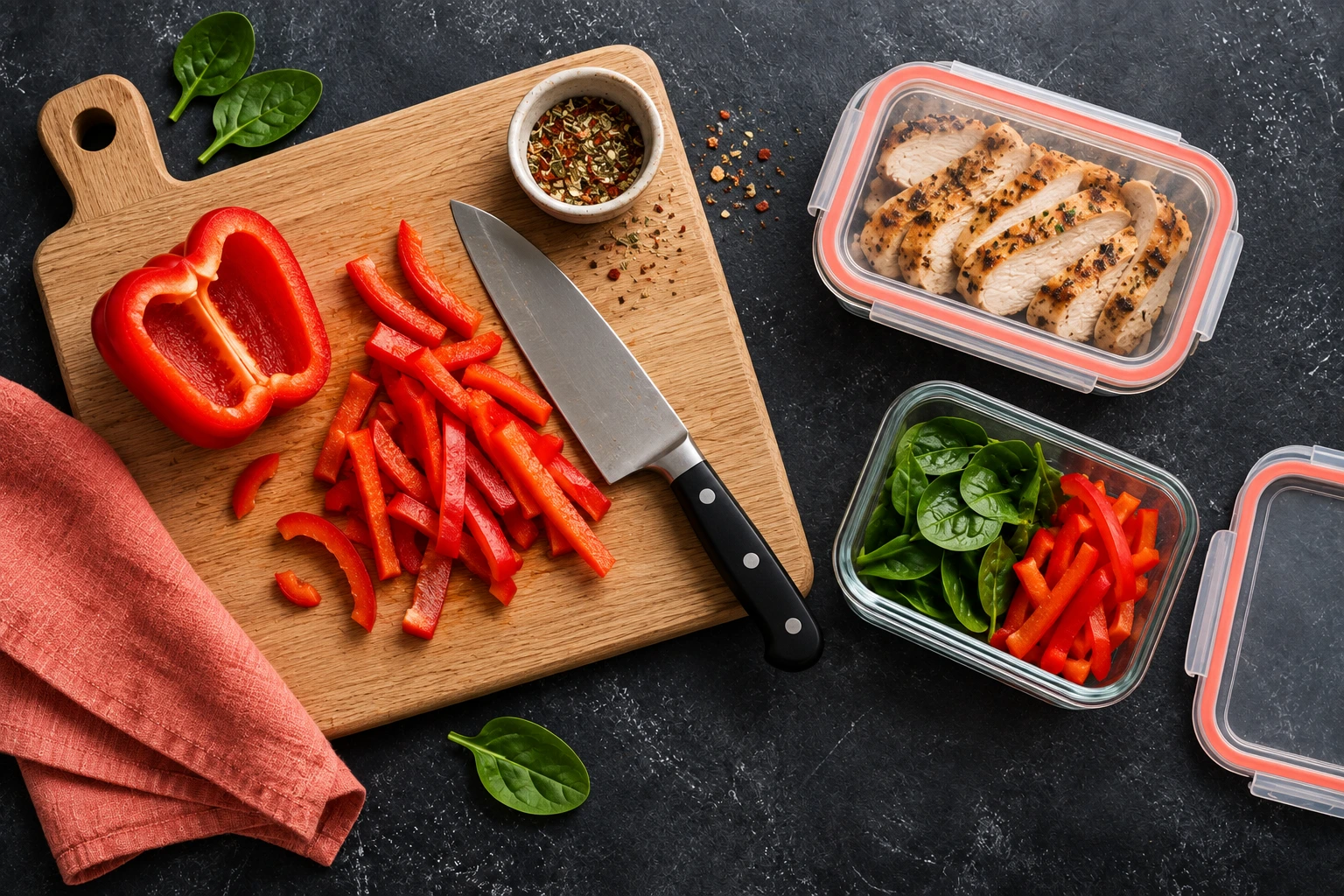
Store leftovers promptly in shallow containers. Keep your refrigerator at 40°F or below, refrigerate perishables within two hours, or one hour above 90°F, and use refrigerated leftovers within three to four days. Freeze portions you will need later. Reheat leftovers to 165°F. These are FoodSafety.gov's storage and reheating guidelines.
What if your week changes?
Keep a backup dinner available, such as eggs on toast or pasta with canned beans. If you skip a planned meal, check its ingredients before moving it to another day. Freeze suitable food while it is still safe instead of hoping you will get to it eventually.
Meal planning means deciding what to eat and buy. Meal prep means doing some of the cooking ahead. You can use either a little or a lot of prep as your schedule allows.
Before your next grocery trip, note which dinners you enjoyed, what went unused, and which night needed an easier option. Keep the meals that worked and change one thing next week.
Want help connecting the plan, shopping list, and cooking steps? Join the Remeal waitlist for launch updates and early access news.