


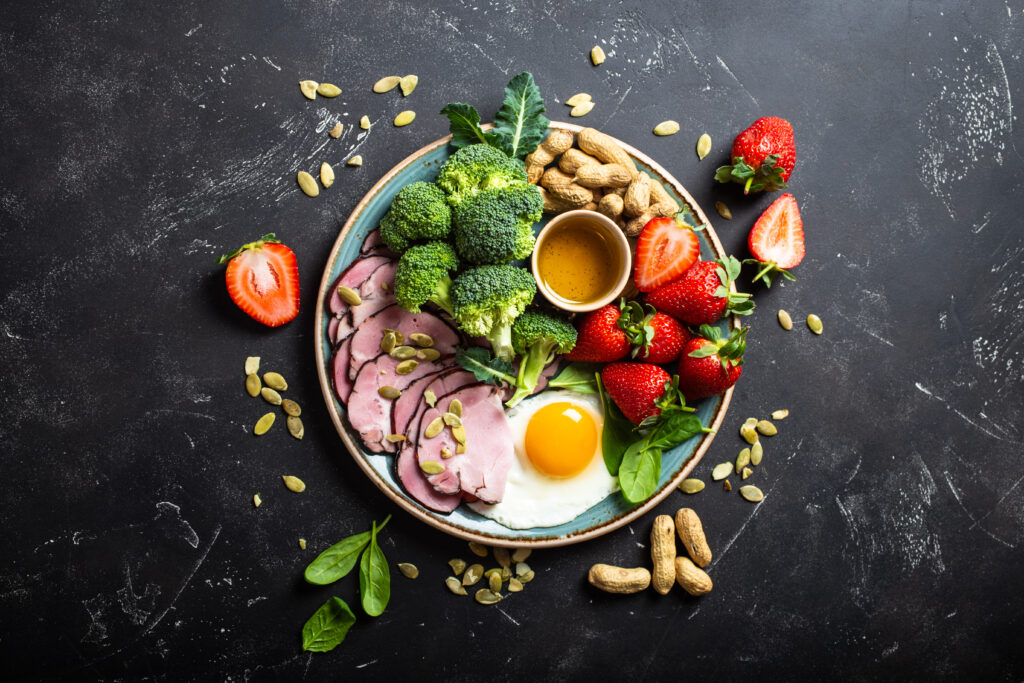
Keto meal planning removes the daily guesswork that derails most beginners before they ever build momentum. Many people who try keto struggle in those first two weeks, not because the diet doesn't work, but because they never had a real plan. They cut the bread, they skip the rice, and then they stand in front of the refrigerator at 6pm with no idea what to eat. That moment is where keto fails for most beginners, and it has nothing to do with willpower.
A solid ketogenic meal plan changes everything. It keeps your net carbs in range and makes the whole process feel a lot less like a diet and a lot more like a system. This guide covers what you actually need: the right macro targets, a full week of meals, the foods to build your shopping list around, and the prep habits that keep you consistent past the first week.
New to planning your meals? Start with our meal planning guide for beginners before adding diet-specific rules.
What keto actually requires: macros and net carbs explained
Keto isn't just "eat less carbs." It's a specific metabolic shift, and hitting the right macro ratios is what determines whether that shift actually happens. Get the numbers wrong, and you're on a low-carb diet, not a ketogenic one.
The macro split that triggers ketosis
The standard ketogenic breakdown is roughly 70–80% of daily calories from fat, 10–20% from protein, and 5–10% from carbohydrates. The reason fat is so high is straightforward: when glucose from carbs is no longer available, your body needs a primary fuel source, and fat fills that role. Your liver converts fat into ketones, which your brain and muscles run on instead of glucose. If fat intake is too low, you're not giving your body the fuel it needs to make the switch, and you'll feel it.
How to calculate net carbs (not total carbs)
Net carbs equal total carbohydrates minus fiber. Fiber doesn't spike blood sugar and passes through the digestive system without being absorbed, so it doesn't count toward your daily limit. Take broccoli as an example: one cup has about 6g of total carbs and 2.4g of fiber, leaving you with roughly 3.6g of net carbs. That's the number that matters. Always subtract fiber before logging carbs. Ignoring this step makes keto feel far more restrictive than it actually is.
Realistic daily targets for beginners
Two starting points work for most people: 20g of net carbs per day for a strict induction approach, and up to 50g for a standard keto range. Many beginners find it easier to start at the lower end, around 20g, for the first one to two weeks. Clinical keto protocols commonly recommend this conservative net carbs target because it substantially increases the likelihood of entering ketosis rather than hovering at the edge of it. Once your body has adapted, you can test whether you tolerate a slightly higher ceiling without losing ketosis.
The foods that make or break your keto plan
Before you think about recipes, think about your plate. The right base ingredients make keto easy to execute. The wrong ones make it a constant calculation.
Proteins and fats to prioritize
The core proteins on a ketogenic meal plan are eggs, beef, chicken, pork, salmon, and other fatty fish. Each carries almost zero net carbs per serving. Eggs clock in at under 1g per large egg; beef, pork, and chicken sit at 0g per 3oz serving. Pair those proteins with healthy fats like avocado (about 3g net carbs per medium avocado), olive oil, butter, and full-fat cheese, and you have the building blocks of nearly every keto meal you'll cook. These are the foods that should dominate your weekly grocery list.
Low-carb vegetables worth adding to every meal
Vegetables are what keep a low-carb meal plan from feeling monotonous and small. Focus on options under 5g of net carbs per serving:
- Spinach — about 1–2g per cup
- Arugula — under 1g per cup
- Zucchini — around 2g per 100g
- Cauliflower — roughly 3g per cup
- Broccoli — 3.6–4g per cup
- Asparagus — about 2g per serving
- Cucumbers — about 2g per serving
These are the volume players on the plate. They add texture, fiber, and nutrients without pushing you over your net carb ceiling.
Surprising foods that quietly wreck your carb count
The hidden carb sources are what catch most beginners off guard. Ketchup, barbecue sauce, teriyaki sauce, and sweet salad dressings all carry significant sugar loads. Flavored yogurts, deli meats with added starches, and even pre-shredded cheese can contain fillers that add carbs where you'd never expect them. Most fruits, all legumes, and anything with added sugar or starch are off-limits. A clean keto shopping list built around single-ingredient whole foods eliminates most of these risks before they become a problem.
How to structure your first keto weekly menu
The goal isn't to memorize a rigid script. It's to understand a simple repeating framework that you can apply week after week, swapping proteins and vegetables without losing the macro balance.
A simple 7-day meal framework
Here's how a practical 7-day keto plan looks when built from real foods. Start Day 1 with scrambled eggs, cheddar cheese, and avocado (under 5g net carbs). Lunch becomes a mixed greens salad with deli ham, olives, cucumber, and olive oil. Dinner is baked salmon with roasted broccoli. Day 2 shifts to a cheese omelet for breakfast, a chicken and cauliflower rice bowl at lunch, and pork chops with green beans at dinner. Day 3 brings tuna lettuce wraps at lunch and a beef stir-fry with zucchini for dinner.
The pattern repeats with minor variations through the week, keeping daily net carbs between 20g and 50g without requiring complex cooking. Each meal follows the same template: a protein, a fat source, and a low-carb vegetable. That structure is what makes a keto recipes and meal plan reusable rather than something you have to rebuild from scratch every Sunday.
Snacks that fit without blowing your macros
Keto naturally reduces hunger because fat keeps you fuller for longer. That said, snacks have a place, especially early on. Hard-boiled eggs, sliced cheese, olives, a small handful of macadamia or pecan nuts, celery with almond butter, and avocado halves all stay within the net carb target and add useful calories. As your body adapts to fat as fuel, you'll notice you need fewer snacks simply because meals keep you satisfied longer.
Keto meal prep strategies that hold up through the week
A good plan on paper falls apart by Wednesday if you haven't prepared anything in advance. Batch cooking solves that problem, and it takes less time than most people think.
What to batch-cook on prep day
Pick two or three proteins, three or four vegetables, and one or two fat-based sauces as your weekly prep foundation. Batch-cook chicken thighs, ground beef, or hard-boiled eggs alongside roasted broccoli, cauliflower, and zucchini. Egg muffins, sheet-pan proteins, and keto casseroles are solid prep formats because they hold their texture through refrigeration and reheating without becoming unpleasant. Cook once, eat well — most prepared proteins and vegetables keep well for three to four days in the refrigerator, with the remainder best stored in the freezer.
Storage, portioning, and reheating that keeps food good
Cool food completely before sealing it in containers. Keep wet components (sauces, dressings) separate from dry ingredients so nothing turns soggy. Label every container with the dish name and the date you made it. Refrigerate anything you'll eat in the first three to four days and freeze the rest. When reheating, add a small amount of water or fat to keep proteins and vegetables from drying out, and always reheat to an internal temperature of 165°F, the standard food-safety threshold recommended by the USDA.
Shortcuts that cut prep time without cutting macros
Some weeks, full prep just isn't possible. That's where smart shortcuts come in. Pre-washed salad greens, rotisserie chicken, canned salmon or tuna, and pre-cut vegetables all fit perfectly within a low-carb meal plan and require almost no preparation. A slow cooker loaded with chicken thighs or a pork shoulder in the morning means shredded meat ready by dinner with zero active cooking time. These aren't cheats. They're the tools that keep your plan running when life gets in the way.
Common mistakes beginners make in the first two weeks
Many keto attempts stall in the first two weeks, not because the diet is too hard, but because of a few specific and completely avoidable mistakes.
Underestimating hidden carbs
You can track your meals honestly and still blow your carb limit without realizing it. Condiments, dressings, packaged snacks, and restaurant sauces all carry carbs that don't feel significant in the moment but add up fast. A few tablespoons of ketchup, a sweetened salad dressing, and a processed meat with starch on the label can collectively push you over your net carb ceiling for the day. Read labels. Build meals from whole, single-ingredient foods, especially in the first week, until the habit is established.
Not eating enough fat
Cutting carbs is only half the equation. Many beginners cut carbs dramatically but don't replace those calories with fat, leaving themselves under-fueled, hungry, and miserable. When that happens, people blame the diet. The actual problem is not eating enough of the right macros. Fat is the fuel source on keto, not just an add-on. Every meal should include a meaningful fat component, whether that's olive oil, avocado, cheese, butter, or a fatty protein.
Skipping electrolytes
When carbohydrate intake drops sharply, the body flushes water rapidly, and with it, sodium, potassium, and magnesium. The result is what people call the "keto flu": headaches, fatigue, muscle cramps, and brain fog. These symptoms are typically electrolyte depletion, not a reaction to the diet itself. Salt your food generously, include an avocado most days for potassium, add leafy greens and pumpkin seeds for magnesium, and drink broth during the first week. Properly addressing electrolytes often improves symptoms within several days, though individual timelines vary.
Who should talk to a doctor before starting
For most healthy adults, keto is safe to start with no special clearance. A few specific situations do require a conversation with your doctor first. People managing diabetes on insulin, sulfonylureas, or SGLT2 inhibitors need medical supervision because keto can cause significant drops in blood sugar and medication adjustments are often necessary. Those with kidney disease, liver conditions, pancreatitis, porphyria, or fat-metabolism disorders should get clinician input before starting.
Pregnant or breastfeeding individuals should not begin keto without medical guidance. People taking warfarin or blood pressure medications may also need dosage adjustments as their diet changes. Think of this as a quick check-in, not a barrier. For most people, it's a short conversation that lets you proceed with full confidence.
Your system is ready: the only step left is to start
Keto works when you have a system. People who stay in ketosis aren't necessarily more disciplined than those who quit, they just know what to eat, how to shop for it, and how to set their week up so the right food is always available. The pillars are simple: understand your macro targets, build a clean shopping list from whole foods, structure a 7-day rotating menu, prep a few proteins and vegetables in advance, and watch for the early mistakes that undo progress.
The first week is the hardest. Your body is adapting, your habits are shifting, and everything feels a bit unfamiliar. Many people find that food choices grow more routine after the first week or two, though how quickly that happens varies from person to person. Once that shift clicks, the system starts to carry itself.
Consistent keto meal planning is what separates people who see results from those who restart the same first week over and over.