


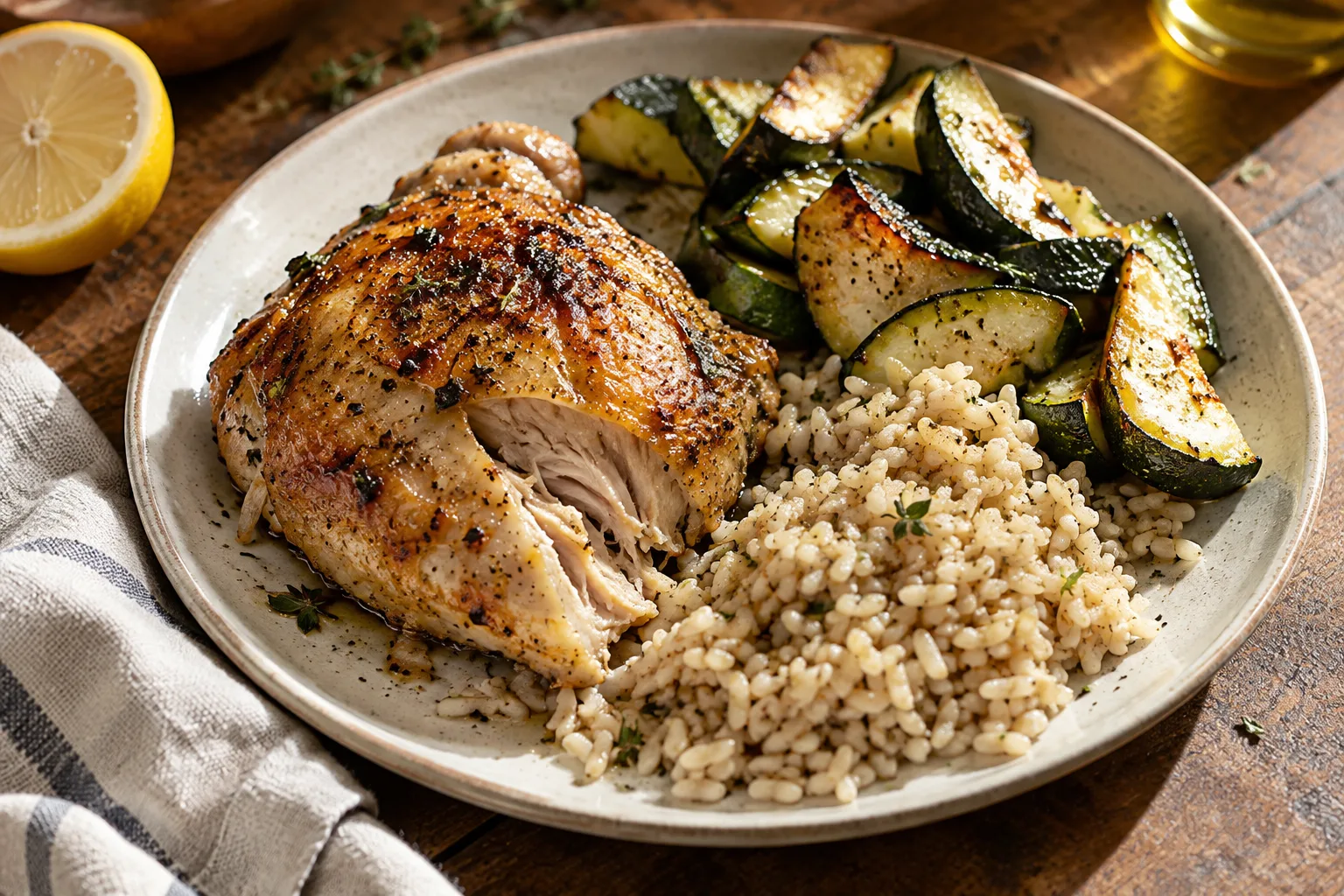
A fridge full of vegetables does not answer the question of what to cook tonight. Mediterranean diet meal planning starts with matching those ingredients to meals you will actually make. Choose a few repeatable breakfasts, build dinners around shared groceries, and leave room for leftovers.
The example below covers seven days without asking you to cook 21 different dishes. Adjust portions to your appetite and household, then subtract anything you already have before shopping.
Build your week around everyday foods
Mediterranean-style eating emphasizes vegetables, fruit, whole grains, beans, nuts, and olive oil, with fish, poultry, eggs, and dairy also fitting into the pattern. You do not need specialty products or a strict list of approved recipes.
For planning purposes, pair a vegetable with a protein source and a grain or potato. That could mean chickpeas, zucchini, and brown rice, or fish, broccoli, and whole-wheat couscous. Add lemon, herbs, or a spoonful of yogurt sauce for flavor.
Start with your calendar. Put the simplest dinner on your busiest evening and save a longer recipe for a night when you have time. Our meal planning guide for beginners walks through that weekly routine.
A flexible 7-day Mediterranean meal plan
Use this as a menu outline, not a calorie prescription. Lunches marked as leftovers assume you deliberately make an extra portion at dinner. All other lunches are assembled separately.
| Day | Breakfast | Lunch | Dinner |
|---|---|---|---|
| Monday | Plain yogurt, oats, berries | Chickpea, cucumber, and tomato pita | Lemon chicken, roasted zucchini, brown rice |
| Tuesday | Whole-grain toast, egg, orange | Leftover chicken and rice bowl | Chickpea and spinach tomato skillet with pita |
| Wednesday | Plain yogurt, oats, berries | Leftover chickpea skillet | Baked fish, broccoli, whole-wheat couscous |
| Thursday | Whole-grain toast, egg, orange | White bean and cucumber salad | Whole-wheat pasta with tomatoes, spinach, and white beans |
| Friday | Plain yogurt, oats, berries | Leftover pasta | Roasted zucchini and chickpea rice bowls |
| Saturday | Whole-grain toast, egg, orange | Leftover rice bowl | Spinach and tomato omelet with whole-grain toast |
| Sunday | Plain yogurt, oats, berries | White bean and cucumber pita | White bean tomato soup with whole-grain toast |
Frozen fish works well for a midweek dinner; thaw it safely before cooking. If you skip fish, use chickpeas with the broccoli and couscous. Prefer another grain? Swap rice for farro or barley and adjust cooking instructions.
The useful part is the overlap: spinach goes into a skillet, pasta, and an omelet; chickpeas become a lunch filling and two dinners. Remeal is being built around ingredient-based recipe suggestions and weekly meal planning, so this is the kind of everyday decision it aims to simplify.
Turn the menu into a grocery list
Write the number of people beside each meal before deciding quantities. For Monday, count dinner servings plus Tuesday's planned lunch portions. Do the same for Tuesday, Thursday, and Friday. This avoids relying on leftovers that never existed.
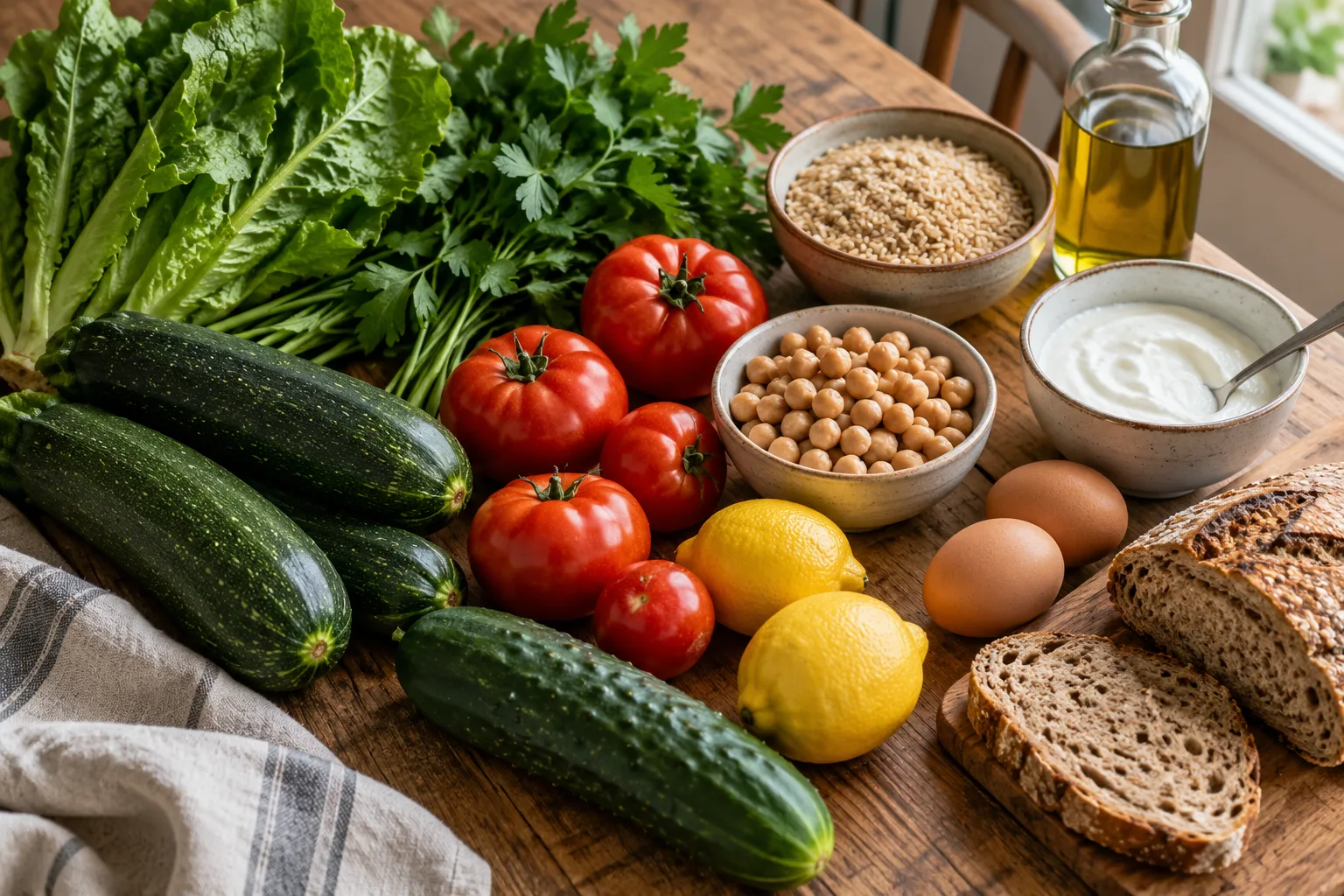
- Produce: zucchini, broccoli, spinach, cucumbers, tomatoes, lemons, oranges, berries, and garlic.
- Protein and dairy: chicken, fish, eggs, plain yogurt, canned chickpeas, and canned white beans.
- Grains: oats, brown rice, whole-wheat couscous, whole-wheat pasta, whole-grain bread, and whole-wheat pita.
- Pantry: olive oil, canned tomatoes, lower-sodium broth, oregano, black pepper, and optional unsalted nuts.
Check pantry supplies first. Choose frozen berries or spinach if you are unlikely to finish fresh packages. For a smaller household, the portioning ideas in meal planning for one can help you buy less and freeze extras.
Prep a few components, then refresh midweek
Before Monday, cook rice for the first two days, wash produce, and mix a small batch of yogurt with lemon and herbs. Keep sauce separate so bowls and pita fillings stay fresh. You can roast Monday's zucchini while cooking the chicken.
On Thursday, check what remains before preparing Friday's rice. Freeze extra bread in individual portions and take out only what you need. A second small prep session is easier to manage than storing a full week's cooked meals in the fridge.
Refrigerate perishable cooked food within two hours, or within one hour when the temperature is above 90°F. Use shallow containers, keep the refrigerator at 40°F or below, and eat refrigerated leftovers within three to four days. Freeze portions you will not use in that window.
Make next week easier
After dinner, note one thing: would you make this meal again? Keep the favorites, swap the meal you skipped, and check the fridge before writing another list. A useful plan gets easier to repeat.
Want help turning your ingredients into a weekly plan? Join the Remeal waitlist for launch updates.