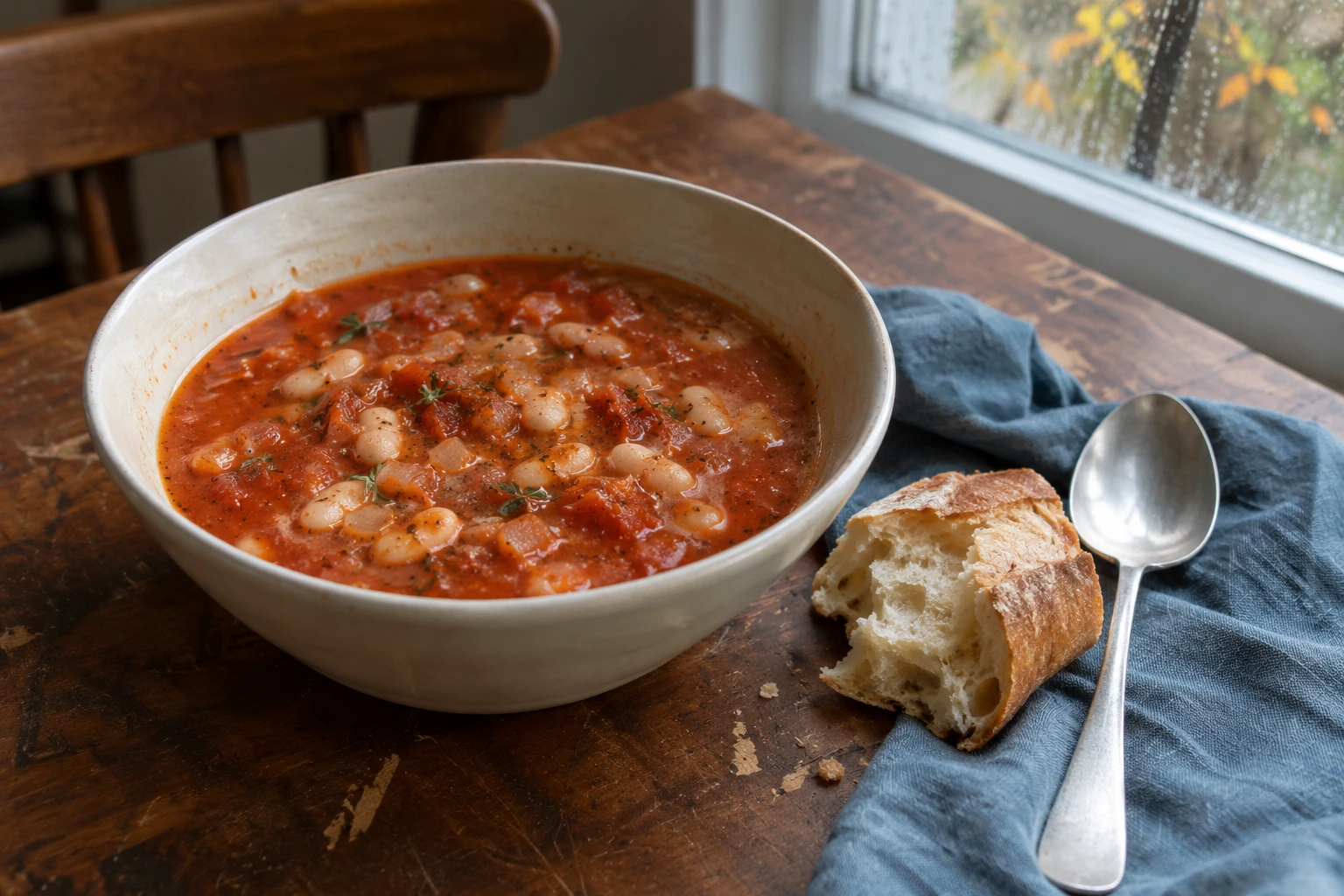
A pot of soup can still turn out watery, bland, or crowded with overcooked noodles. Good soup recipes solve those problems through order: soften the vegetables, build a base, and add delicate ingredients near the end. These five dinners use familiar groceries, with enough guidance to make each pot your own.
The amounts below are starting points for about four servings. Add bread or a sandwich for a big meal, and adjust the liquid to the texture you like. For a wider dinner rotation, pair one soup night with these easy dinner ideas.
Choose the soup that fits your ingredients
Match the base to what needs using. Canned beans give tomato soup substance without a long simmer. Split red lentils soften into the broth, while barley keeps a chewy bite. Set out the ingredients before heating the pot so garlic does not scorch while you hunt for a can opener.
| Soup | What gives it body | Finish with |
|---|---|---|
| Tomato and white bean | Canned beans, partly mashed | Basil and olive oil |
| Red lentil and carrot | Lentils that soften and break down | Lemon and plain yogurt |
| Chicken noodle | Cooked chicken and pasta | Parsley and black pepper |
| Potato and corn | Some of the cooked potato, mashed | Chives and smoked paprika |
| Mushroom barley | Pearl barley and browned mushrooms | Thyme and a little vinegar |
1. Tomato and white bean soup
Start with one small chopped onion, two minced garlic cloves, 1 tablespoon olive oil, two drained 15-ounce cans of white beans, one 28-ounce can of crushed tomatoes, and 3 cups lower-sodium broth. Keep more broth for thinning. Use vegetable broth for a meatless pot.
Soften the onion in the oil over medium heat, stirring until tender. Add the garlic, then stir in the tomatoes, beans, and broth. Bring to a gentle simmer and cook until the flavors come together. Mash a ladleful of beans against the side of the pot, then stir them back through. Add more broth if needed.
Taste before adding salt because canned tomatoes, beans, and broth vary. Tear in basil just before serving. Toasted bread catches the thick broth; a handful of spinach can wilt in the hot soup. If you prefer a smooth base, blend the tomatoes before adding the beans.
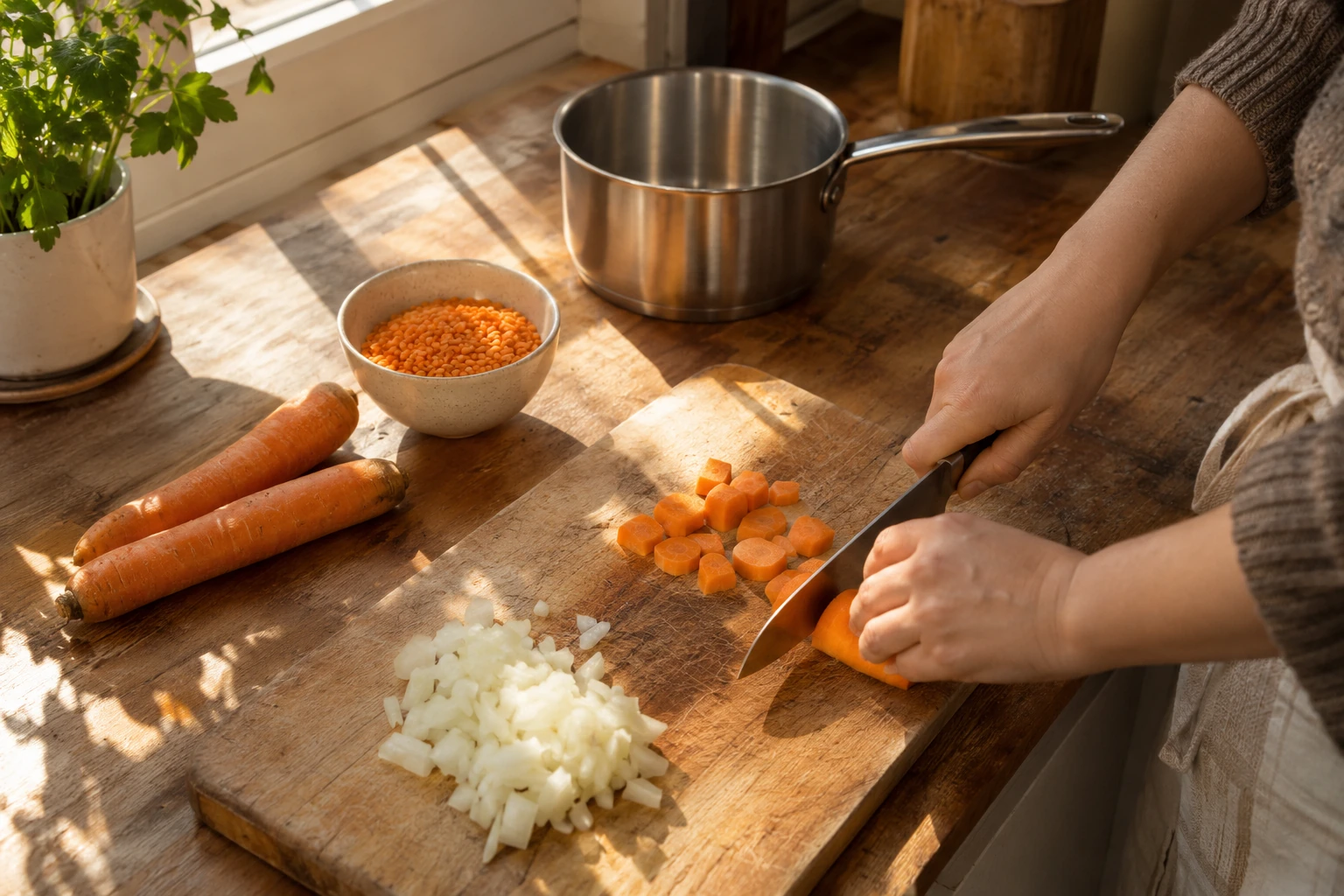
2. Red lentil and carrot soup
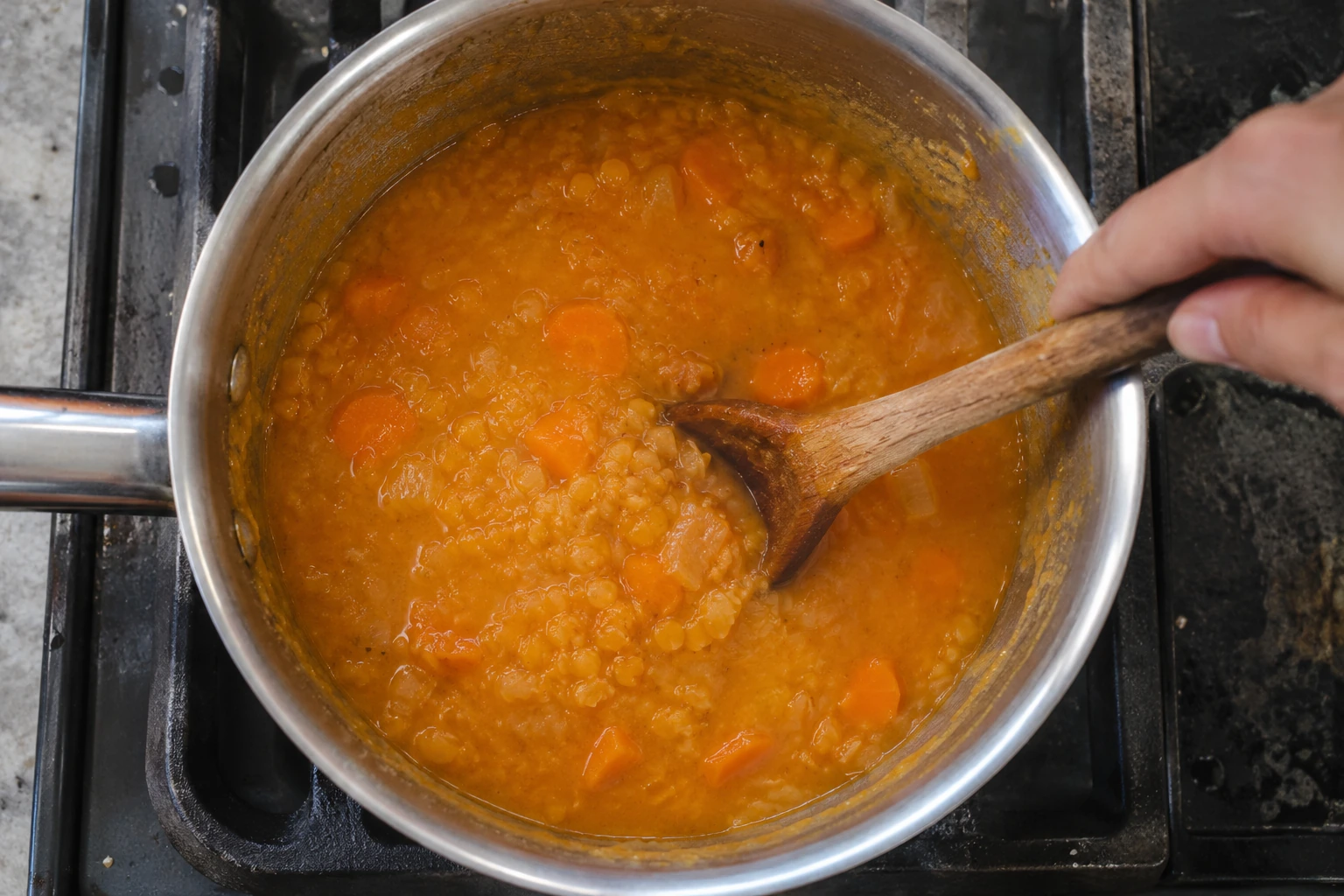
Use one small onion, two diced carrots, 1 tablespoon oil, 1 teaspoon ground cumin, 1 cup rinsed split red lentils, and 4 cups vegetable broth. Soften the onion and carrot first, then stir in the cumin briefly. Add the lentils and broth, bring to a simmer, and cook until the lentils are tender and starting to collapse.
Stir along the bottom as the soup thickens and add water if it begins to stick. Leave it rustic or blend part of the pot. Finish with lemon juice to taste. Spoon plain yogurt onto individual servings if wanted; leave it off portions you plan to freeze. The lentils continue absorbing liquid after cooking.
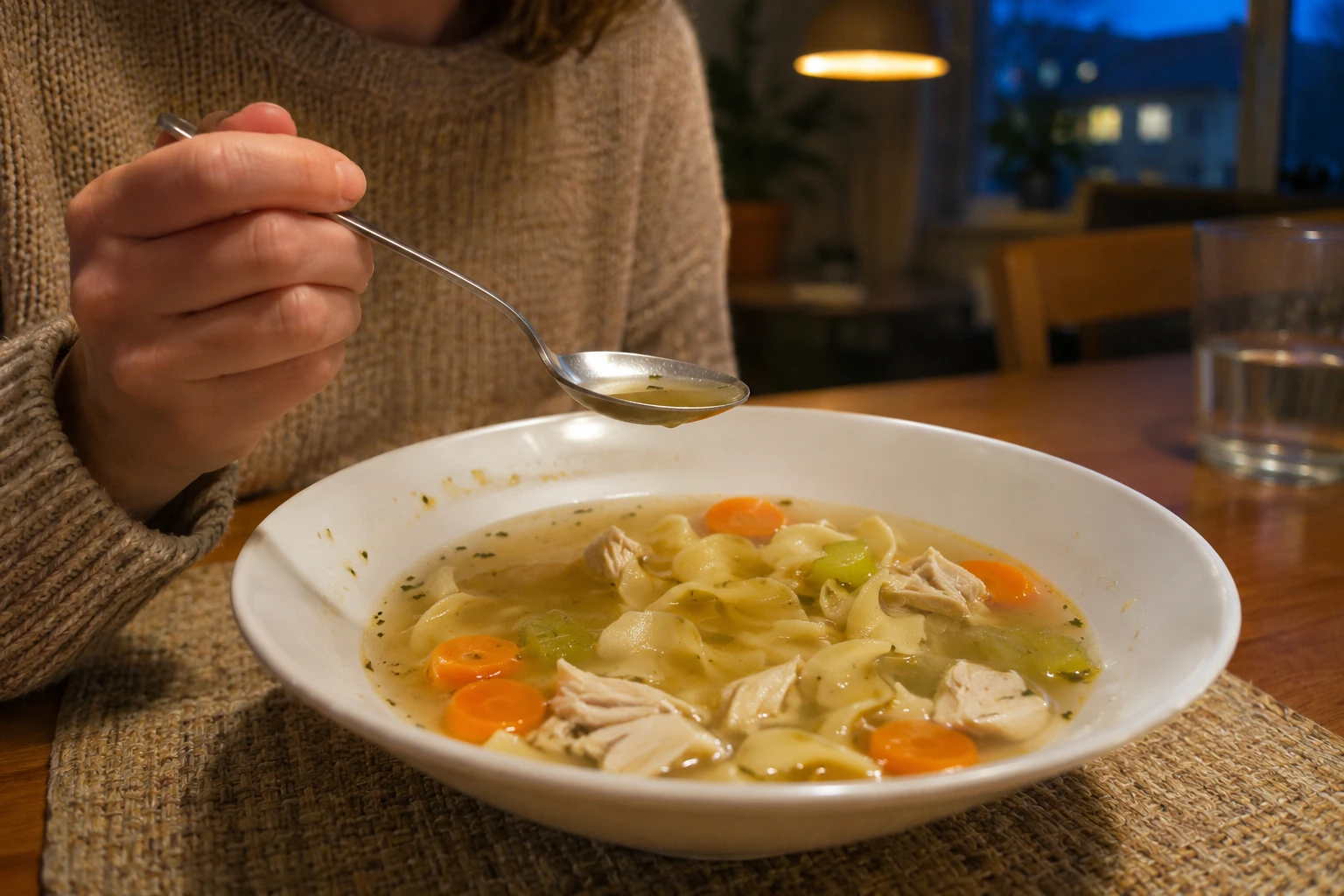
3. Chicken noodle soup without soggy pasta
Use safely stored cooked chicken and count its refrigerator time from the original cooking date. Gather one chopped onion, two sliced carrots, one sliced celery stalk, 1 tablespoon oil, 5 cups chicken broth, 1 cup dry short noodles, and 2 cups shredded cooked chicken. Soften the vegetables in the oil, add broth, and simmer until the carrots are nearly tender.
Add the noodles and follow their package directions for doneness. Stir in the chicken near the end and heat it to 165°F, checking with a food thermometer. Keep simmering until the noodles are tender. Parsley and pepper finish the bowl without hiding the chicken flavor.
For planned leftovers, cook the noodles separately and add them to each portion at serving. Store them separately too, so they do not absorb the broth. This small change makes soup a useful part of your meal prep ideas rather than a pot of swollen pasta.
Choosing one soup and reusing its carrots, greens, or bread in another dinner makes shopping simpler. Remeal is being developed around everyday meal planning; while it is in pre-launch, that same habit of connecting ingredients can help you build a more practical weekly menu.
4. Potato and corn soup without cream
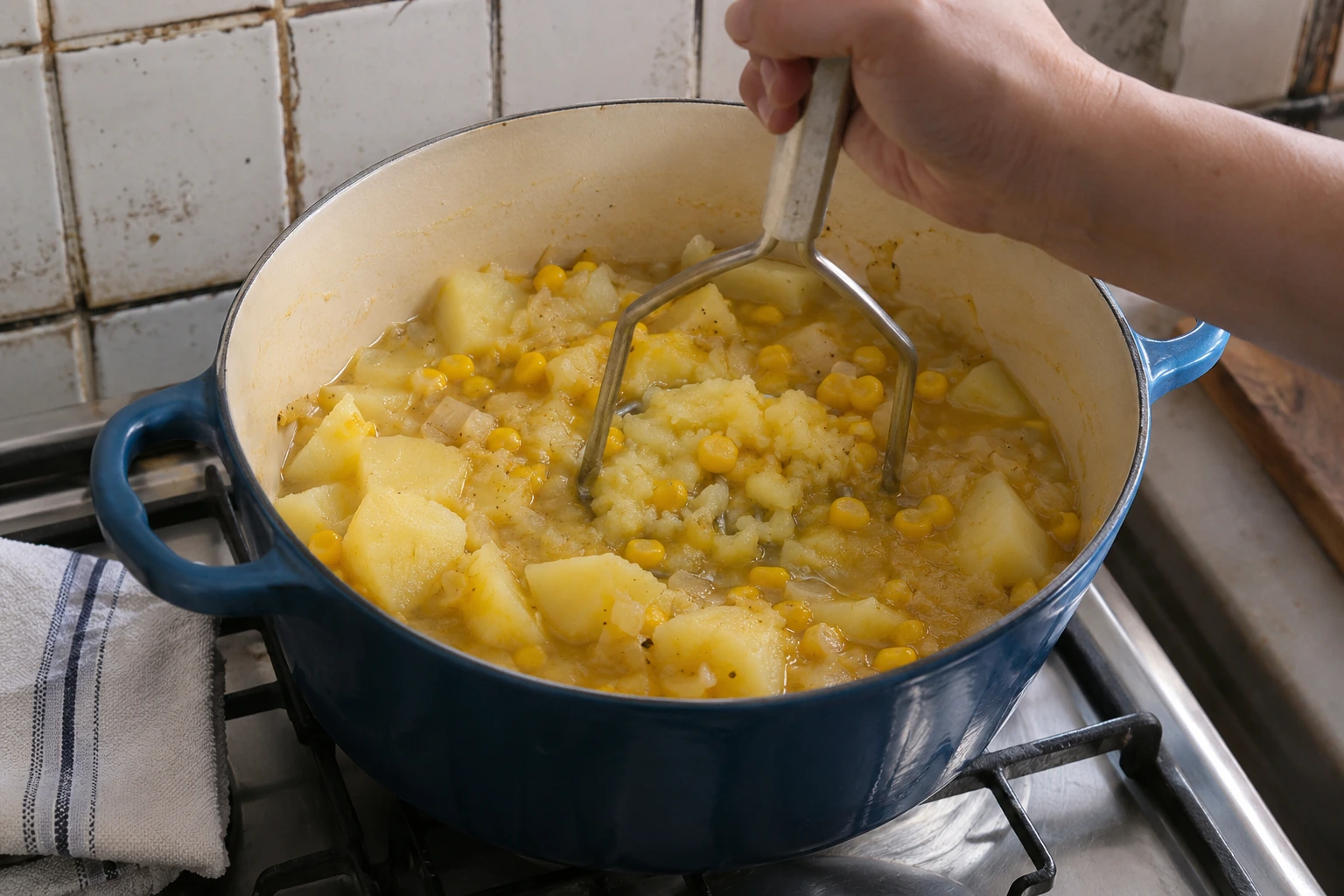
Combine one small chopped onion, 1 tablespoon oil, 1 pound diced Yukon Gold potatoes, 2 cups frozen corn, and 4 cups vegetable broth. Soften the onion first. Add the potatoes and broth, then simmer until a fork slides easily into the potatoes. Stir in the corn and cook until hot and tender.
Use a potato masher to press some cooked potatoes against the bottom of the pot, keeping the pot steady. Leave plenty of pieces. Add chives and a pinch of smoked paprika. Follow the frozen corn package directions for cooking; drained canned corn also works. Adjust the seasoning after adding it.
5. Mushroom barley soup with a deeper base
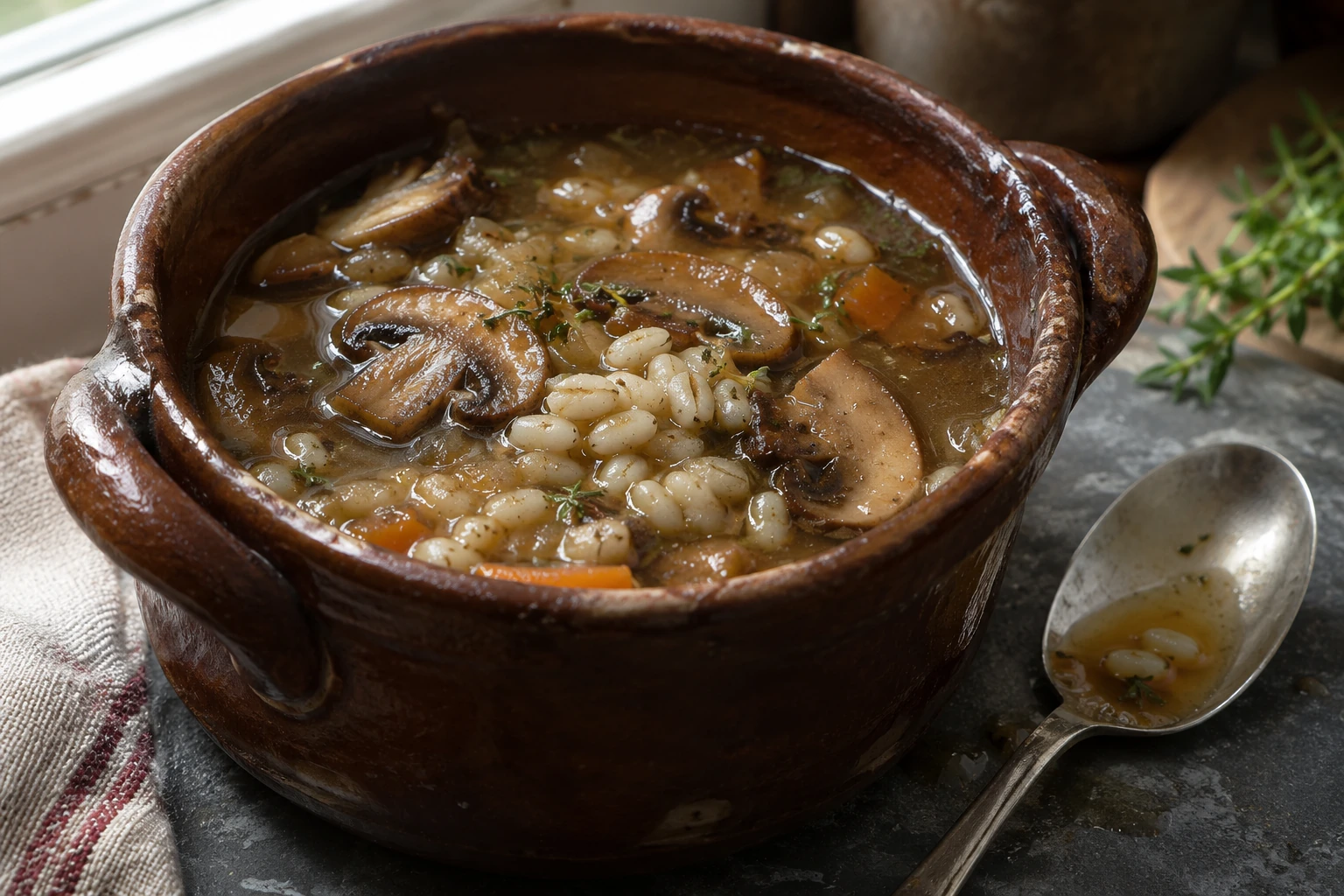
Slice 8 ounces of mushrooms and chop one small onion. Add one small finely chopped carrot if wanted. Cook the mushrooms in 1 tablespoon oil in a wide pot, letting their released moisture evaporate before stirring often. Add the onion and optional carrot, and soften them. Stir in 1/2 cup dry pearl barley, a pinch of dried thyme, and 5 cups vegetable broth.
Simmer according to the barley package until the grains are tender with a little chew. Add broth as needed and scrape up the browned bits from the pot. Finish with a little vinegar, tasting as you go. Regular pearl barley needs a different cooking schedule from quick barley, so check the label.
Fix the pot before you serve
Let a spoonful cool slightly before tasting. Change one thing at a time, then taste again. If the broth tastes flat, acidity may help; it cannot reverse too much salt. For other simple stovetop dinners, use the same ingredient planning with these one-pot meals.
| Problem | Useful adjustment |
|---|---|
| Too thick | Add hot unsalted broth or water a little at a time. |
| Too thin | Mash some beans or potatoes, or simmer uncovered while stirring. |
| Too salty | Extend with unsalted broth and more cooked ingredients. |
| Flat flavor | Try a little lemon or vinegar, then reassess the seasoning. |
Keep the simmer gentle once the ingredients are tender. A hard boil can break up potatoes and reduce the broth quickly. Stir from the bottom, especially in lentil soup, and add water before it catches. Use a pot with room above the liquid so stirring does not send soup over the rim. Add fresh herbs at serving.
Cool, store, and reheat the extra servings
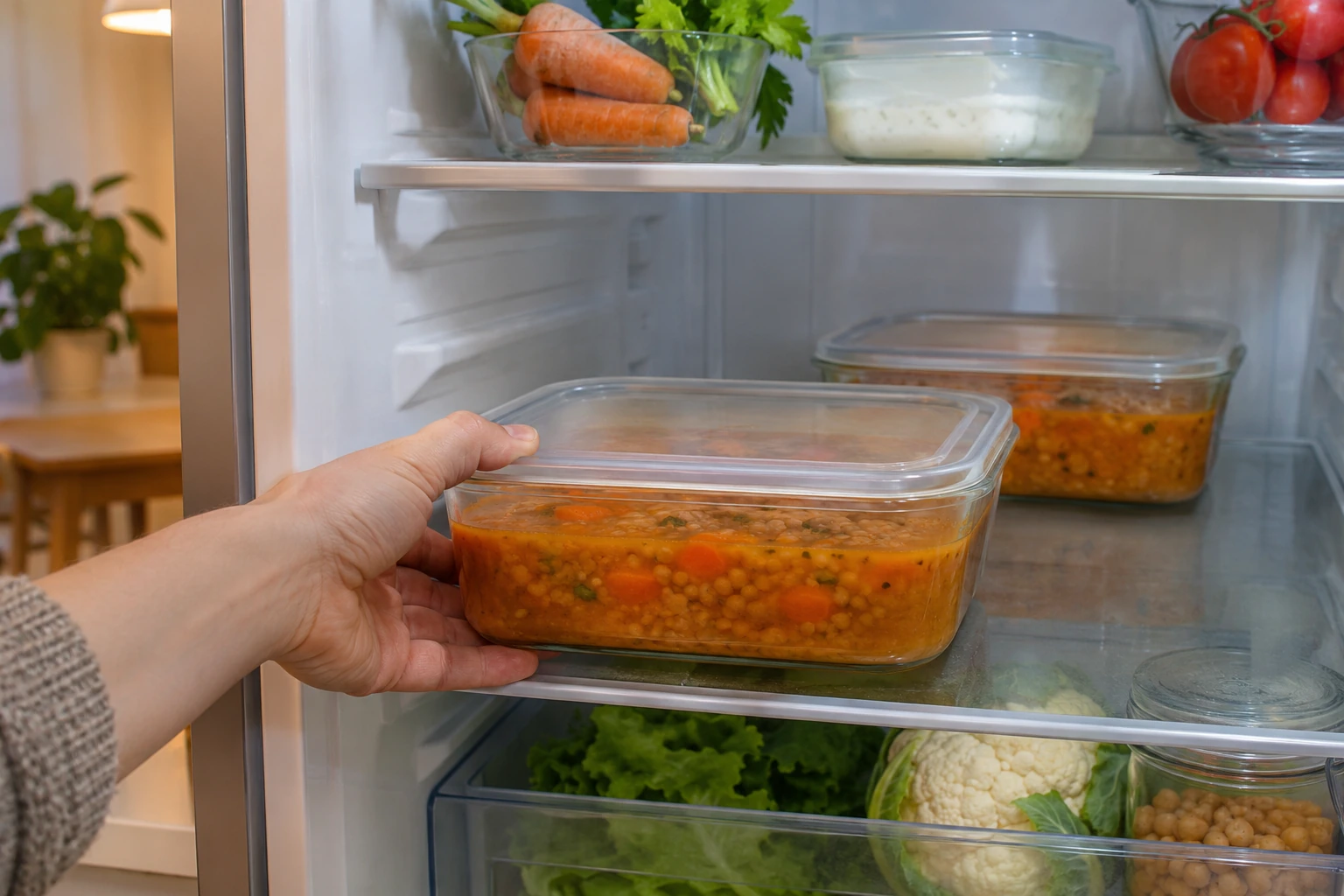
Refrigerate soup within two hours, or within one hour if the surrounding temperature is above 90°F. Divide it into shallow containers instead of leaving a deep pot on the counter. Hot food can go directly into the refrigerator; keep the refrigerator at 40°F or below.
Use refrigerated leftovers within three to four days, or freeze portions you will not use in that window. For longer meal planning, see these freezer meals. Reheat leftovers to 165°F; bring soups to a rolling boil, stir well, and check the temperature.
Pick one pot, shop for its base, and keep the finishing ingredients separate. When you want to follow the project as it develops, explore Remeal and join the waitlist.