A tray of dinner ingredients can come out with scorched broccoli, firm potatoes, and meat that still needs cooking. Sheet pan dinners work better when you plan the order, rather than expecting everything to finish together. Match the size of each ingredient to its cooking speed, give slower vegetables a head start, and leave room for hot air to circulate.
These five meals use starting quantities for two adults. Adjust portions to your appetite and use a rimmed sheet pan large enough to hold the food without piling it up. For other cooking formats, explore these easy dinner ideas.
Plan the order before you turn on the oven
A thick potato piece needs a different schedule from a thin pepper strip. Cut dense vegetables smaller, keep similar pieces alike in size, and check the food instead of relying on one universal timer. Oven temperatures below are starting settings, not promises of an exact cooking time.
| Ingredient | Useful preparation | When to add it |
|---|---|---|
| Potatoes, carrots, cauliflower | Small chunks or thin slices | Give them a head start |
| Chicken strips, sausages, tofu | Similar sizes within each type | Plan around safe doneness |
| Cod, zucchini, peppers, broccoli | Keep delicate pieces substantial | Add later when needed |
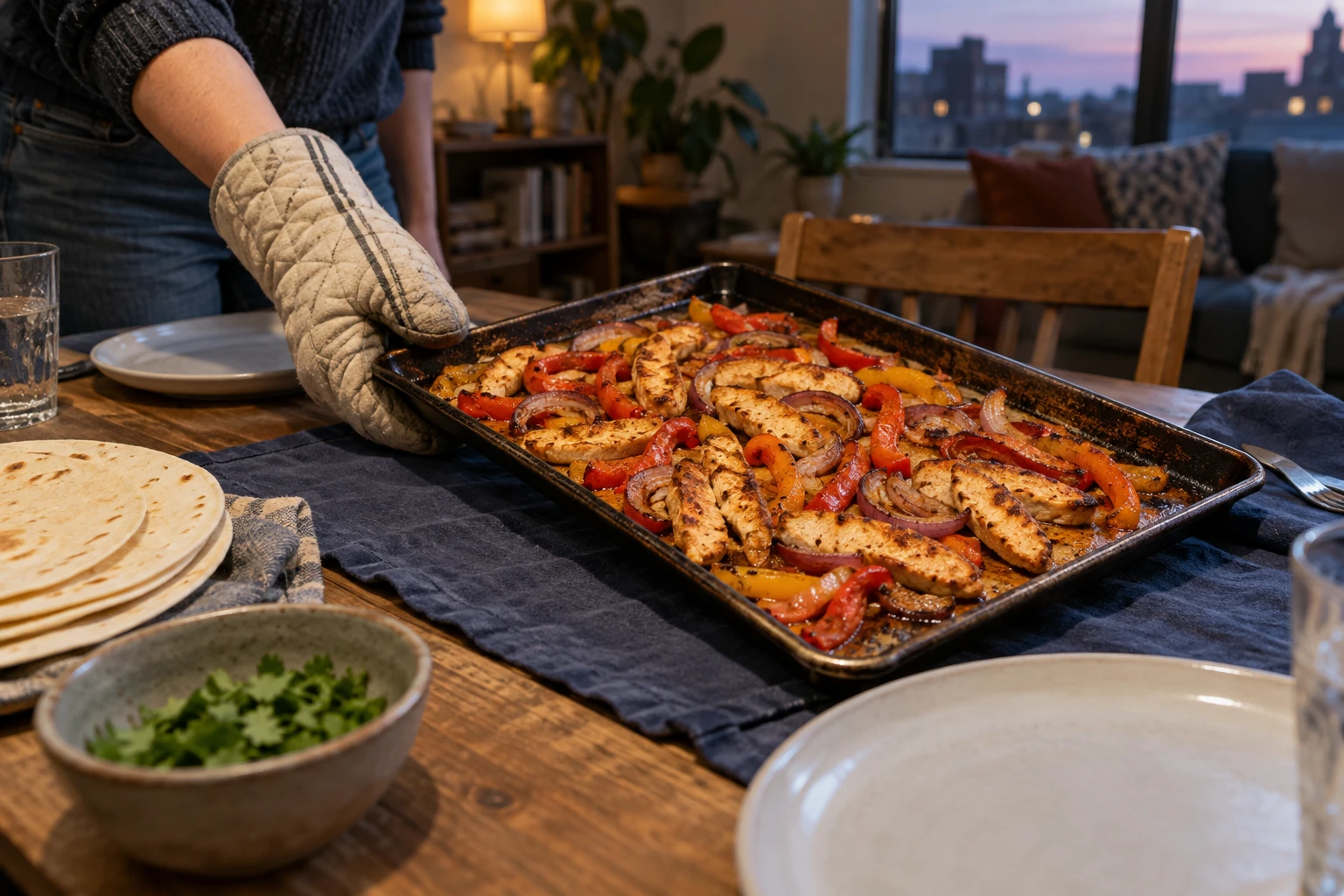
1. Chicken fajita tray with peppers and onion
Heat the oven to 425°F. Slice 10 to 12 ounces boneless chicken into even strips. Cut 2 bell peppers and half a red onion into strips or wedges. Coat the vegetables lightly with oil, cumin, smoked paprika, and salt, then spread them across a rimmed pan.
Give the vegetables a short head start if you want softer peppers, then add the chicken in a loose layer with a little oil and the same spices. Wash your hands after handling raw chicken and use clean utensils for the vegetables. Roast until the thickest chicken strips reach 165°F, checking with a food thermometer. Add some lime juice after roasting and serve with tortillas.
Separate zones help organize the tray, but they do not prevent raw juices from spreading. If vegetables contact raw chicken juices, cook them to 165°F as well. Do not remove those vegetables early just because their edges look browned.
2. Cod with cherry tomatoes and zucchini
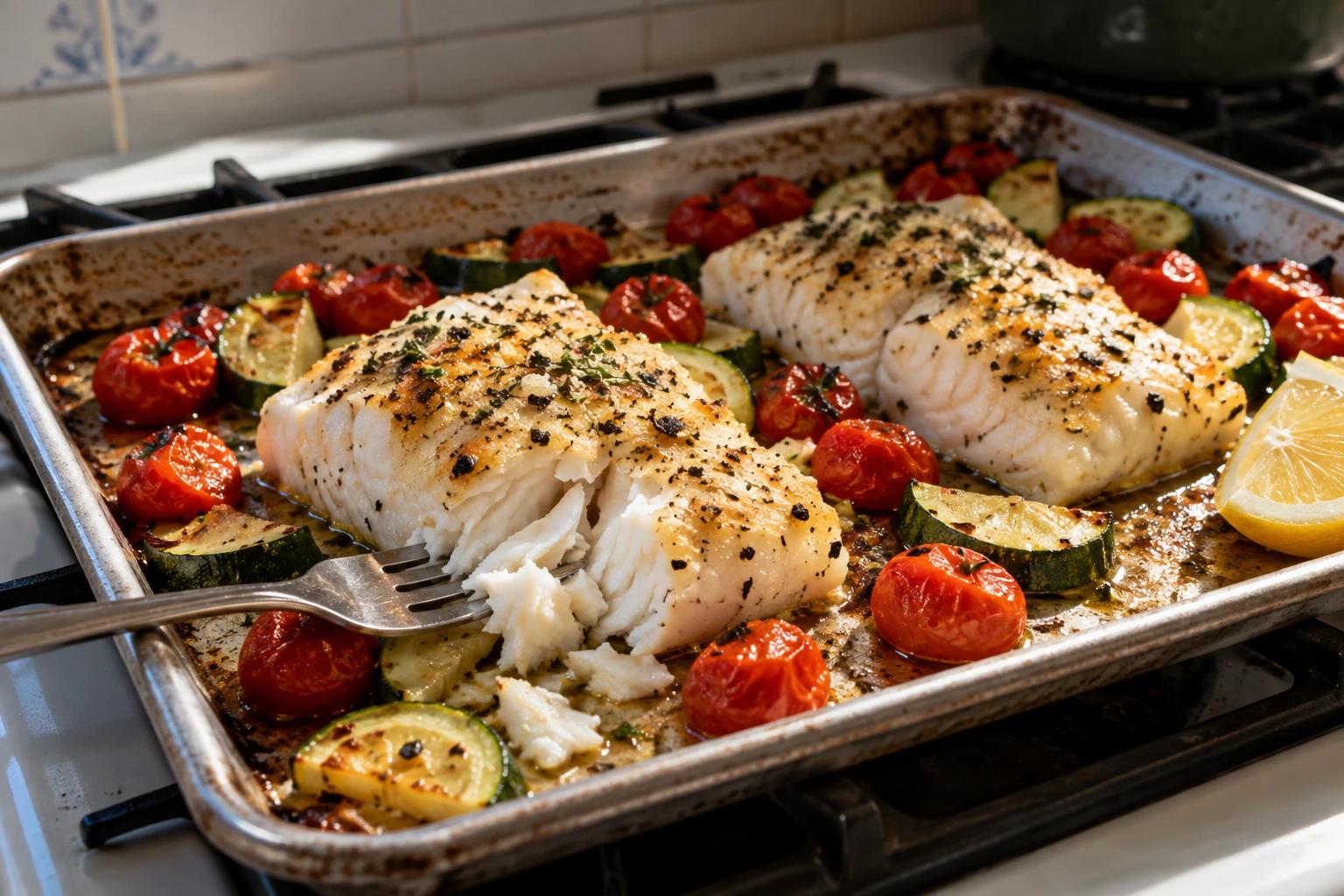
Heat the oven to 400°F. Use 2 cod fillets, a small zucchini cut into thick half-moons, and a handful of cherry tomatoes. Dry the zucchini, coat the vegetables lightly with oil, and arrange them with space between pieces. Start the vegetables first so some moisture evaporates.
Pat the fish dry, season with pepper and a little salt, and add it when the vegetables begin to soften. Continue roasting until the fish reaches 145°F in its thickest part. Fillets vary in thickness, so check each piece. Avoid crowding this tray: zucchini, tomatoes, and fish all release moisture. Add lemon at the table rather than pouring more liquid over the pan.
3. Tofu with carrots and broccoli
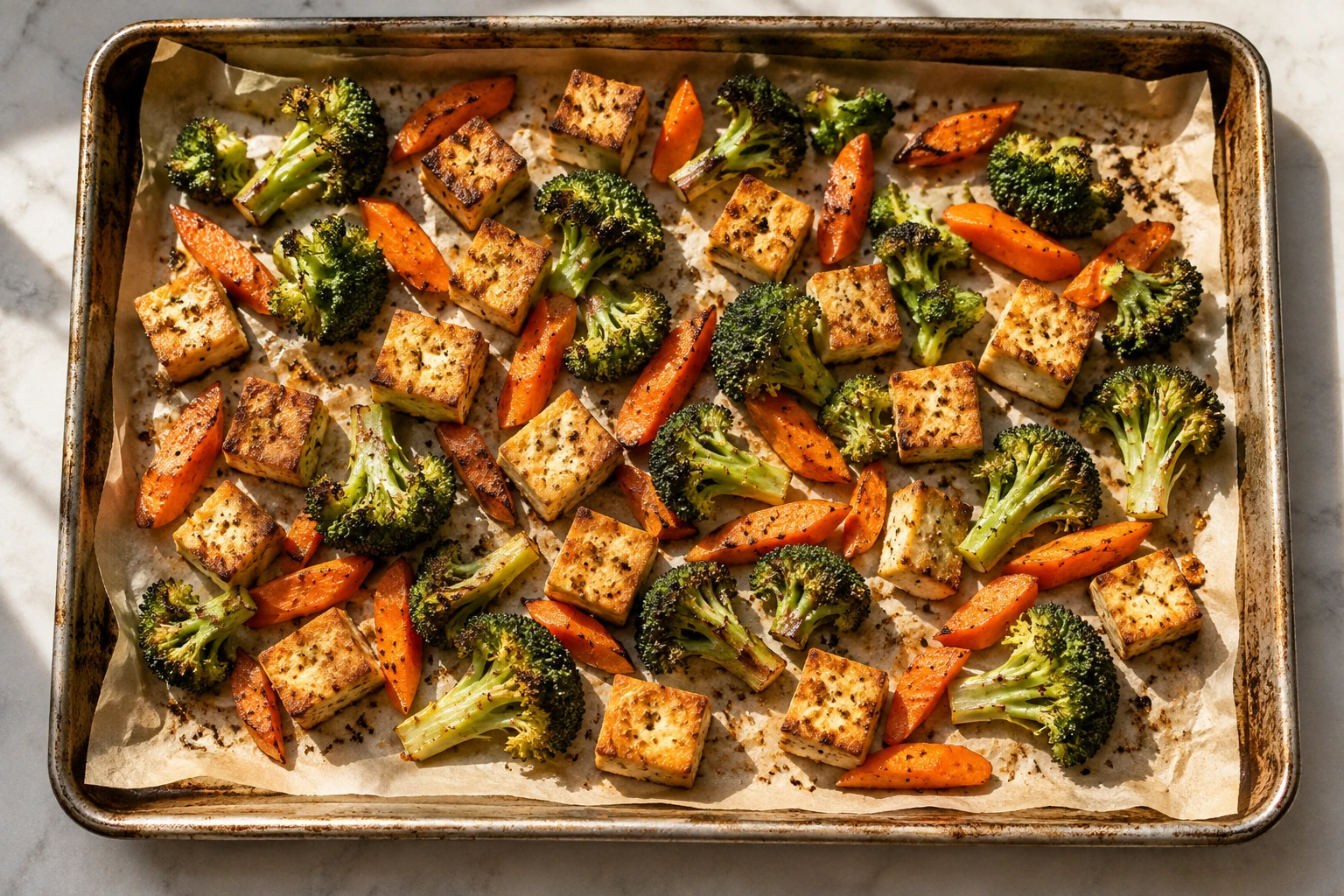
Heat the oven to 425°F. Drain a 14-ounce block of firm tofu and pat it dry, following any preparation instructions on the package. Cut it into cubes. Thinly slice 2 carrots and break a small broccoli crown into florets, trimming thick stems into smaller pieces.
Toss the carrots and tofu with a little oil and spread them out. Let them begin roasting before adding the broccoli, which can brown at the tips before carrots soften. Turn the tofu gently once its surface firms, and follow its package cooking instructions. Finish with a little soy sauce or a squeeze of lime after roasting, so the tray does not start with a puddle of sauce.
Remeal is in development, with meal planning and cooking support central to the project. While preparing a week of dinners, note which vegetables need using and choose a cooking method that fits them. This is a practical way to cook with what you have without treating every substitution as identical.
4. Pork sausages with potatoes and peppers
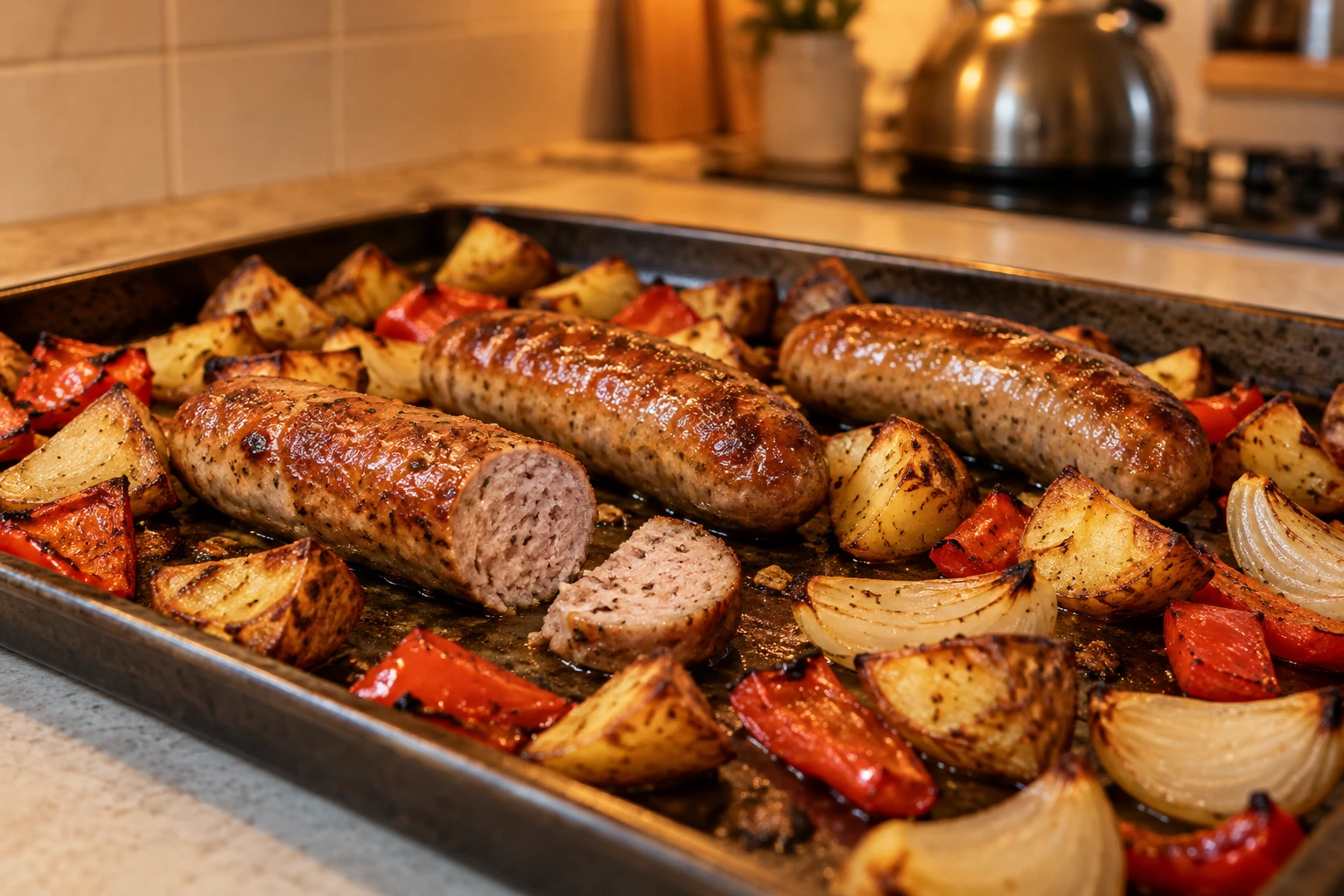
Heat the oven to 425°F. Cut 2 medium potatoes into small, even chunks and toss with oil, pepper, and optional dried oregano. Spread them on the pan and roast until they begin to soften. Add 2 fresh, uncooked pork sausages and 1 bell pepper cut into broad strips.
Turn the sausages and vegetables as needed for even cooking. Check the sausages with a food thermometer: the center must reach 160°F. Their browned skins do not confirm the inside is done. Keep vegetables exposed to raw sausage juices on the tray until safely cooked through. If the potatoes stay firm, make the pieces smaller next time or give them a longer head start.
5. Chickpeas with cauliflower and red onion
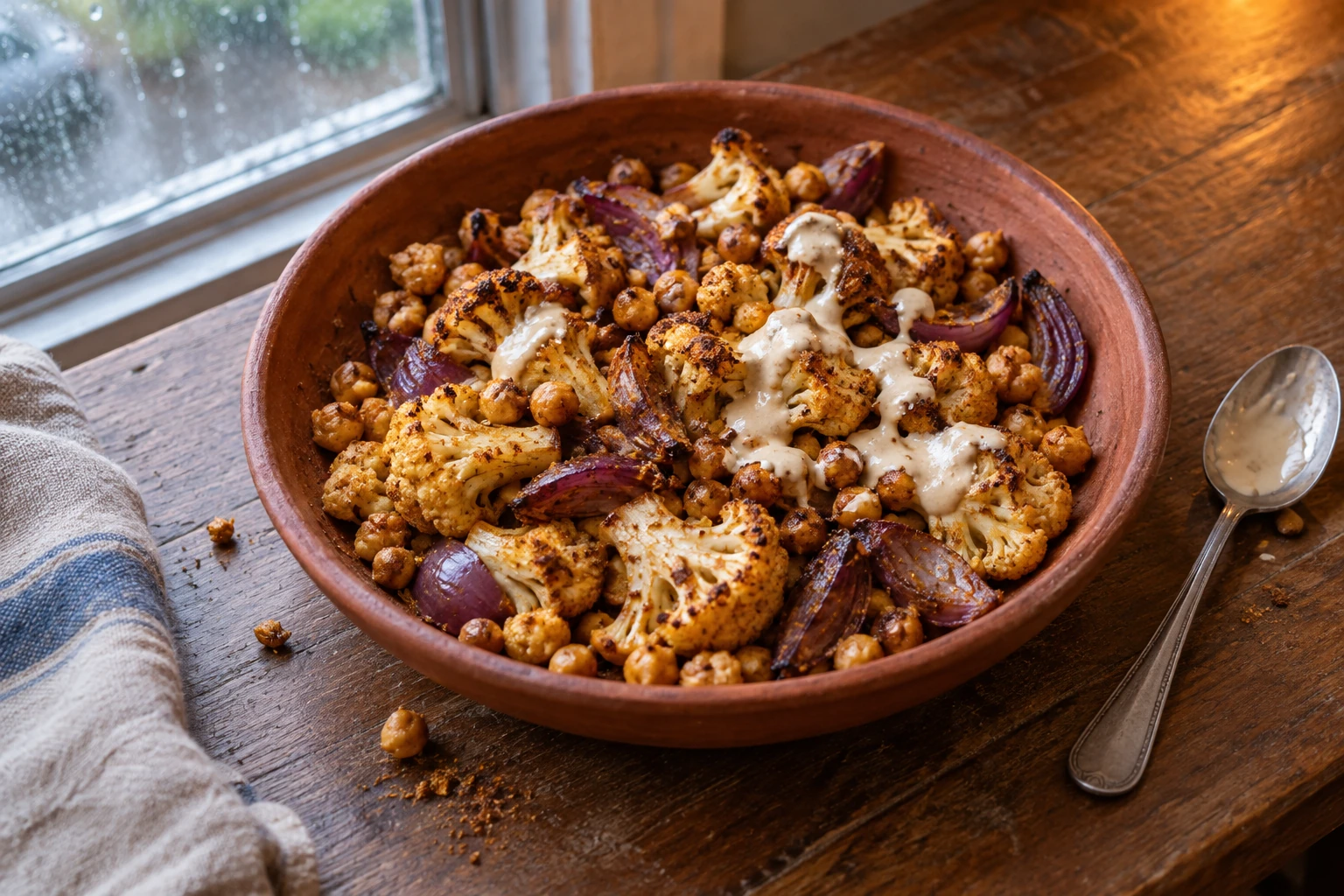
Heat the oven to 425°F. Drain a 15-ounce can of chickpeas and dry them well. Cut half a medium cauliflower into small florets and half a red onion into wedges. Coat everything lightly with oil, cumin, pepper, and salt, then arrange it in a single layer.
If the cauliflower pieces are large, start them before adding the chickpeas and onion. Turn gently during roasting and check that the cauliflower is tender in the center. For an optional sauce, stir tahini with lemon juice and enough water to make it pourable. Spoon it on after serving so the roasted vegetables keep their texture.
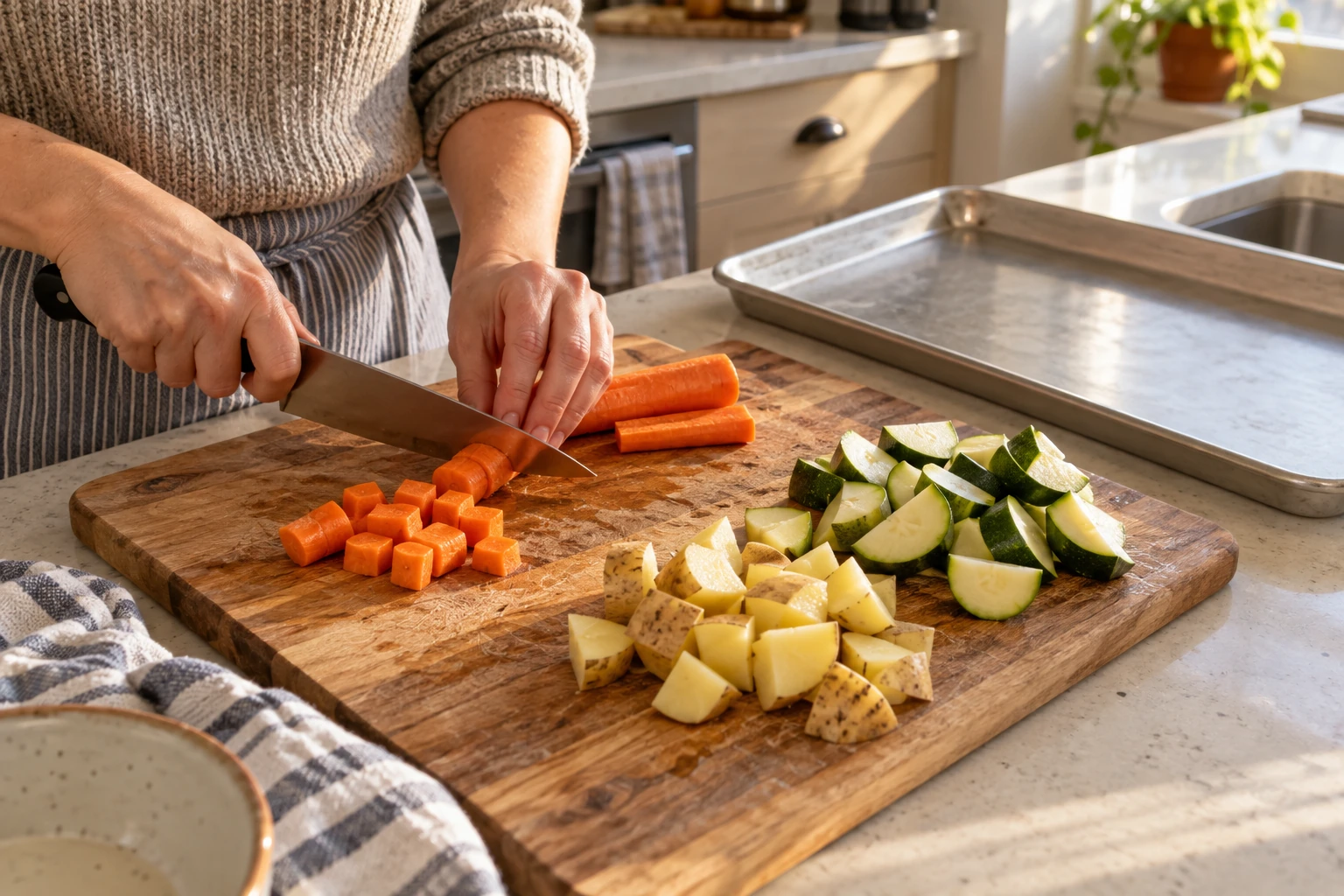
Give every ingredient enough space
Spread food across the tray rather than building a deep layer. Wet ingredients crowded together tend to steam in their juices. Dry vegetables after washing, drain canned ingredients, and apply enough oil for a light coating. Keep liquid sauces for serving unless the recipe specifically needs them during cooking.
Use the same fork check for dense vegetables each time: the center should yield, not just the surface. Measure meat and fish in their thickest parts. If a timer rings before the food is ready, keep cooking and check again. A temperature reading and the vegetable's texture are more useful than color alone.
| Problem | Likely cause | What to change |
|---|---|---|
| Pale, wet vegetables | Crowding or excess moisture | Dry food; leave more space |
| Burnt tips, firm centers | Uneven cuts or poor timing | Cut dense pieces smaller; stagger additions |
| Sticking food | Dry surface or turning too early | Lightly oil; loosen gently after browning |
If your pan cannot hold the full amount loosely, reduce the batch or use another tray. Dinner does not improve by forcing four servings onto a pan that fits two. When the oven is inconvenient, one pot meals offer another way to keep cookware manageable.
Serve dinner and plan the next tray
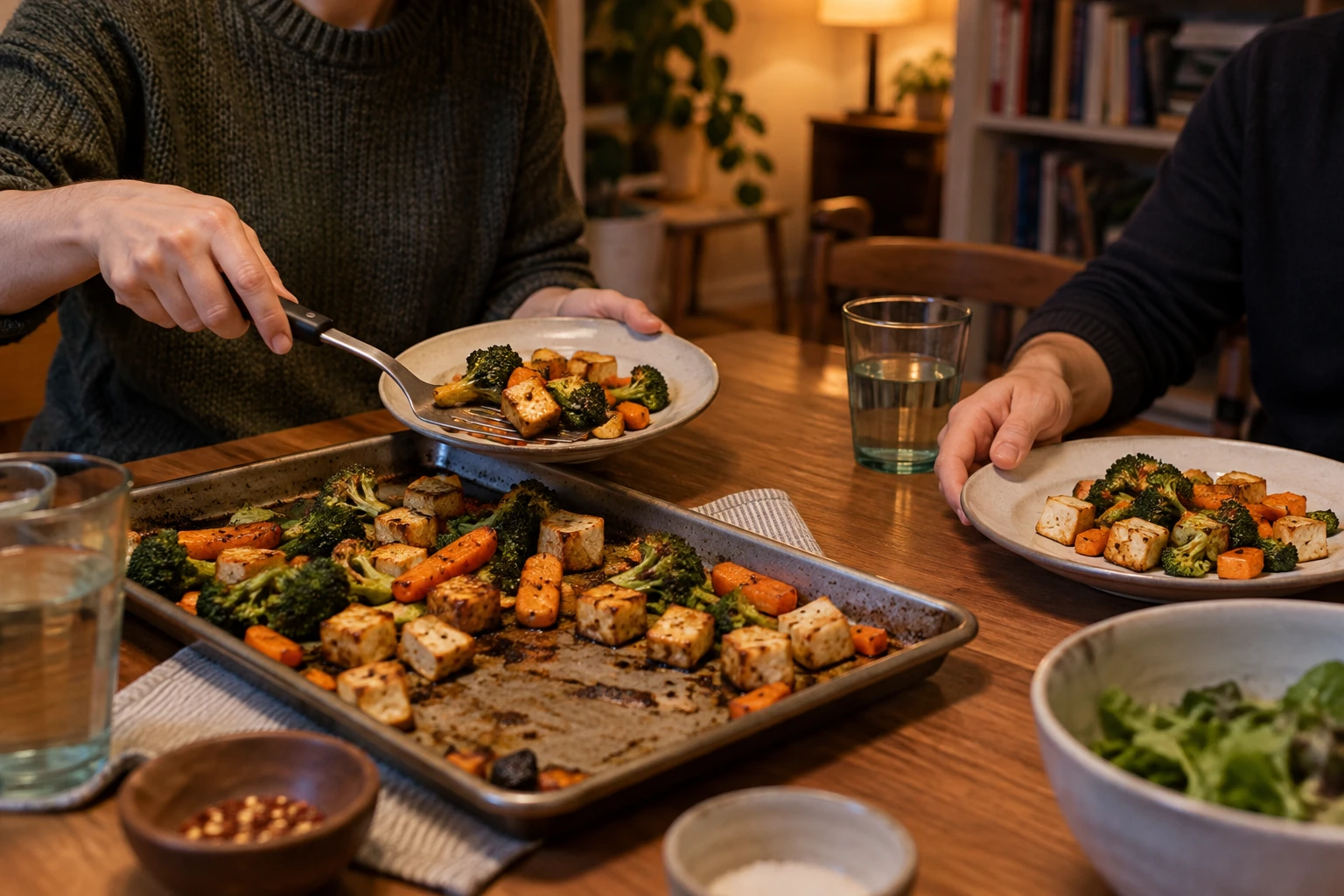
Move finished food to plates with clean serving utensils. Keep a note of the vegetable cuts and order that suited your oven, then use those observations in your next round of meal planning for beginners.
Refrigerate perishables within 2 hours, or within 1 hour above 90°F. Use shallow containers, keep the refrigerator at 40°F or below, and eat refrigerated leftovers within 3 to 4 days. Reheat leftovers to 165°F. Store tahini sauce separately so you can add it after reheating.
Choose a tray that fits tonight's ingredients, then explore Remeal for the project's latest information and launch updates.